



CANVAS BUCKET BAG - KANTAN BAG - NIWAKI
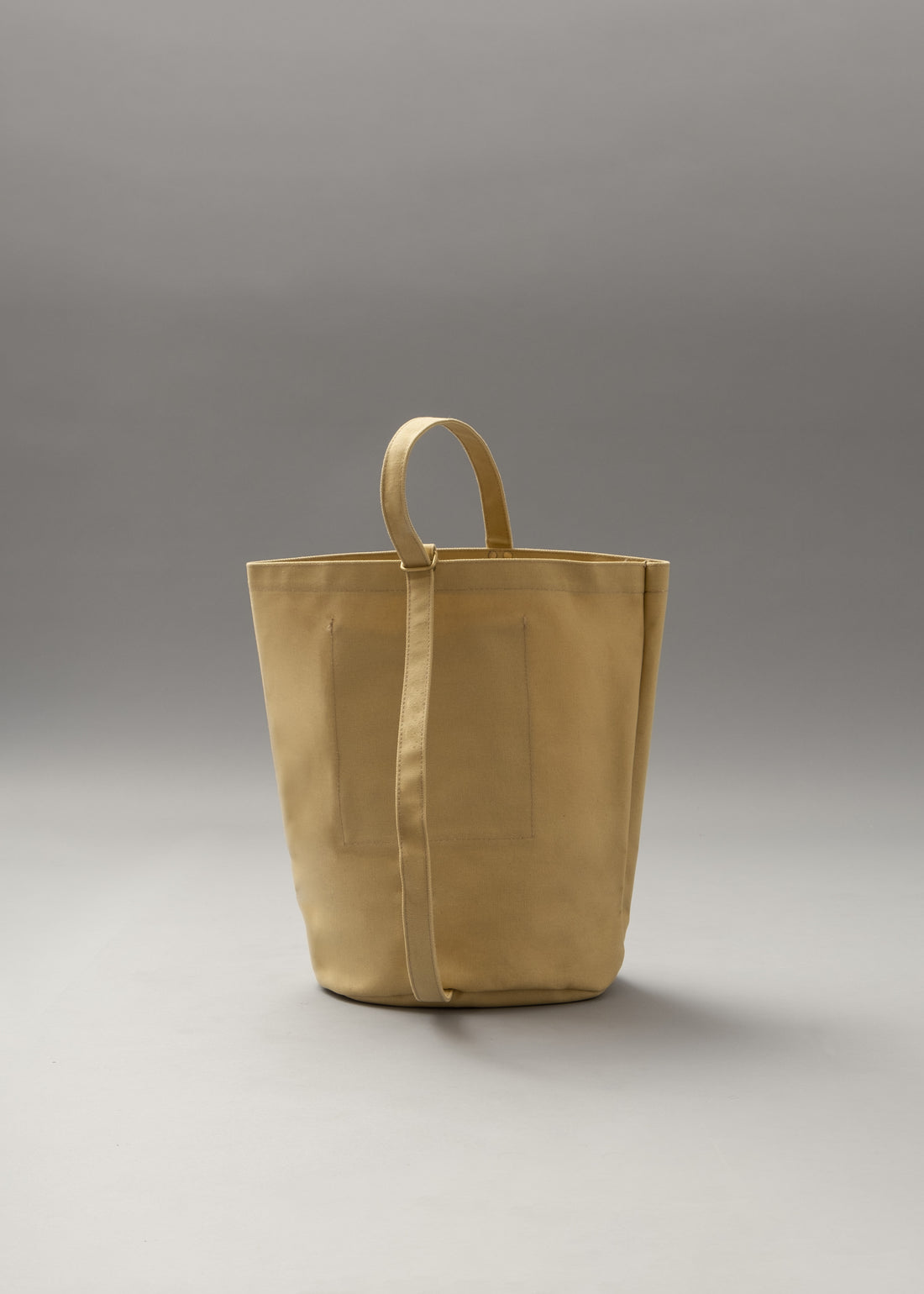
Niwaki’s Kantan Bag, a bucket bag, is ideal for carrying your garden tools or everyday essentials.
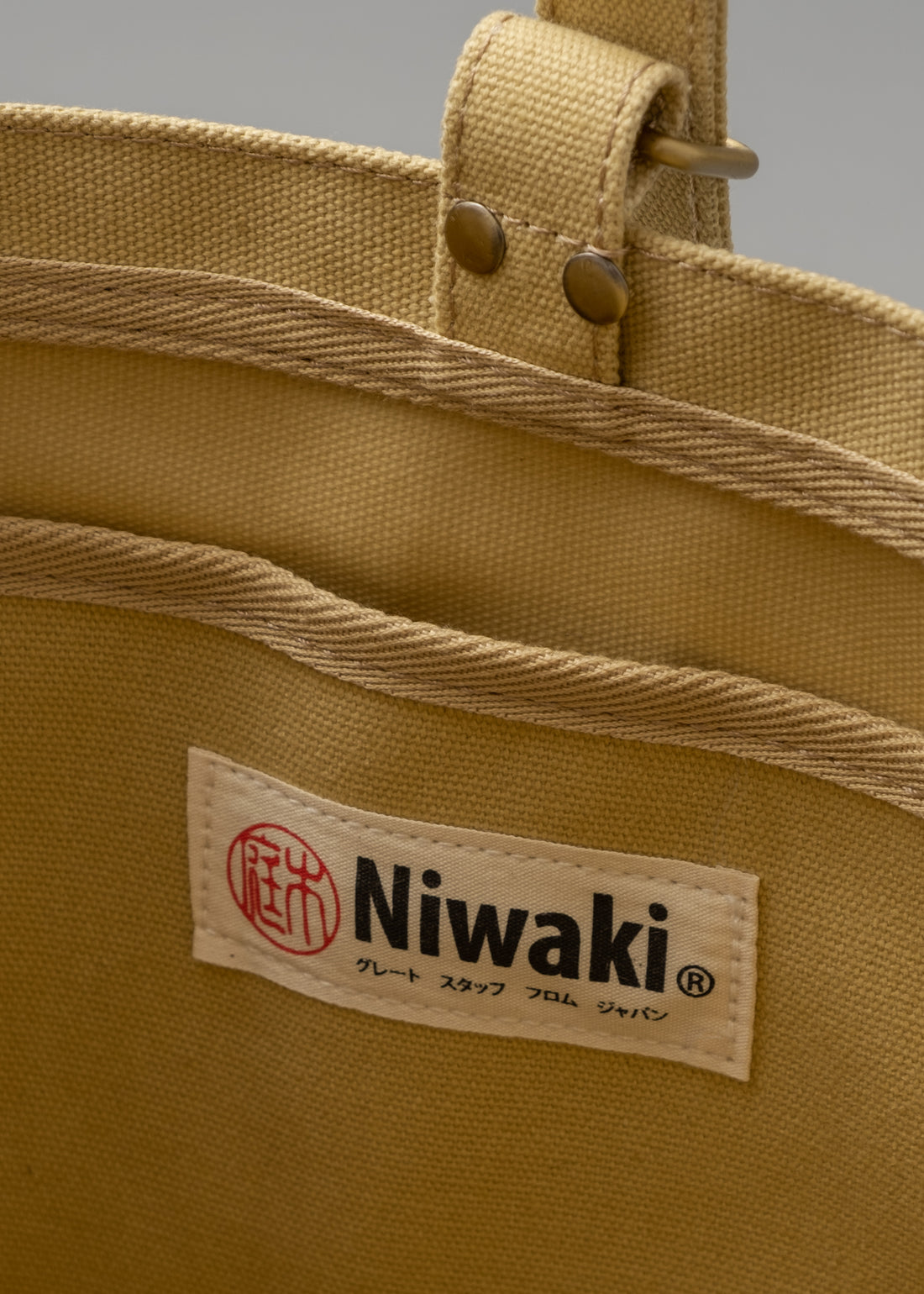
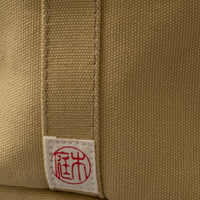
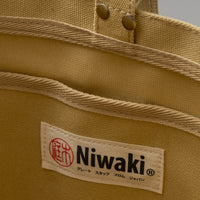
A sturdy, weather-resistant waxed cotton canvas (450g/m²), featuring a solid, PVC-lined base for sharp tools, a sliding handle, a large interior pocket, and nothing else.
It is the practically perfect bag, following the “KANTAN” golden rule: “keep it simple” in Japanese.
This bag can be worn as a shoulder bag or carried by hand. It closes easily by sliding the handle through the metal eyelet, ensuring your belongings stay securely in place while you are on the move.
-
Dimensions: 420 x 270 mm
- Sliding handle
- Snap closure
- Interior pocket: 210 x 180 mm
- Material: 450g (16oz) waxed cotton canvas
- Made in China
Niwaki brings the best of Japanese craftsmanship to gardeners, chefs, and artisans. Tools with simple and effective designs, created to last and renowned for their exceptional quality.
- Weight: 500 g
- Dimensions: 420 x 420 mm
- Base diameter: 270 mm
- Sliding handle
- Snap closure
- Inner pocket: 210 x 180 mm
- Material: 450g coated canvas
- Made in China
After studying sculpture in London, Jake Hobson went to Japan to investigate the Japanese relationship with nature and the environment around them.
Jake discovered that Japanese gardens were not just like gardens. They were mountains, rivers, rocks, trees, and waterfalls. It was everything he loved; these gardens told stories and referred to real landscapes in Japan.
Niwaki literally means "garden tree"; it is the art of tree pruning, which is quite different from Bonsai, as the roots are not pruned. But Niwaki is much more than that. It implies a philosophy—that of the landscape, of the re-creation of unique microcosms, and the vision of a man and his connection to, his understanding of, and his learning from nature.
But all this was possible thanks to the use of tools that shared the same philosophy, created slowly, simply, by hand, by local master blacksmiths with exceptional expertise.
For Jake Hobson, every tool has three crucial elements:
- a good material, primarily high-quality carbon steel
- a good design, generally as simple as possible
- good craftsmanship, passed down from generation to generation.
Japanese tools do not skimp on any of these elements: you feel the quality of the craftsmanship the moment you hold them in your hand; they simply and perfectly perform the job for which they were designed, and they last, holding their edge for a long time, rewarding the user with years, decades, and even lifetimes of pleasure.