


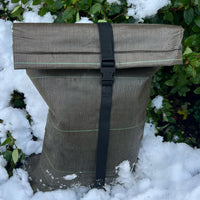
BALCONY COMPOST BAG - GEOTEXTILE FABRIC - BACSAC®
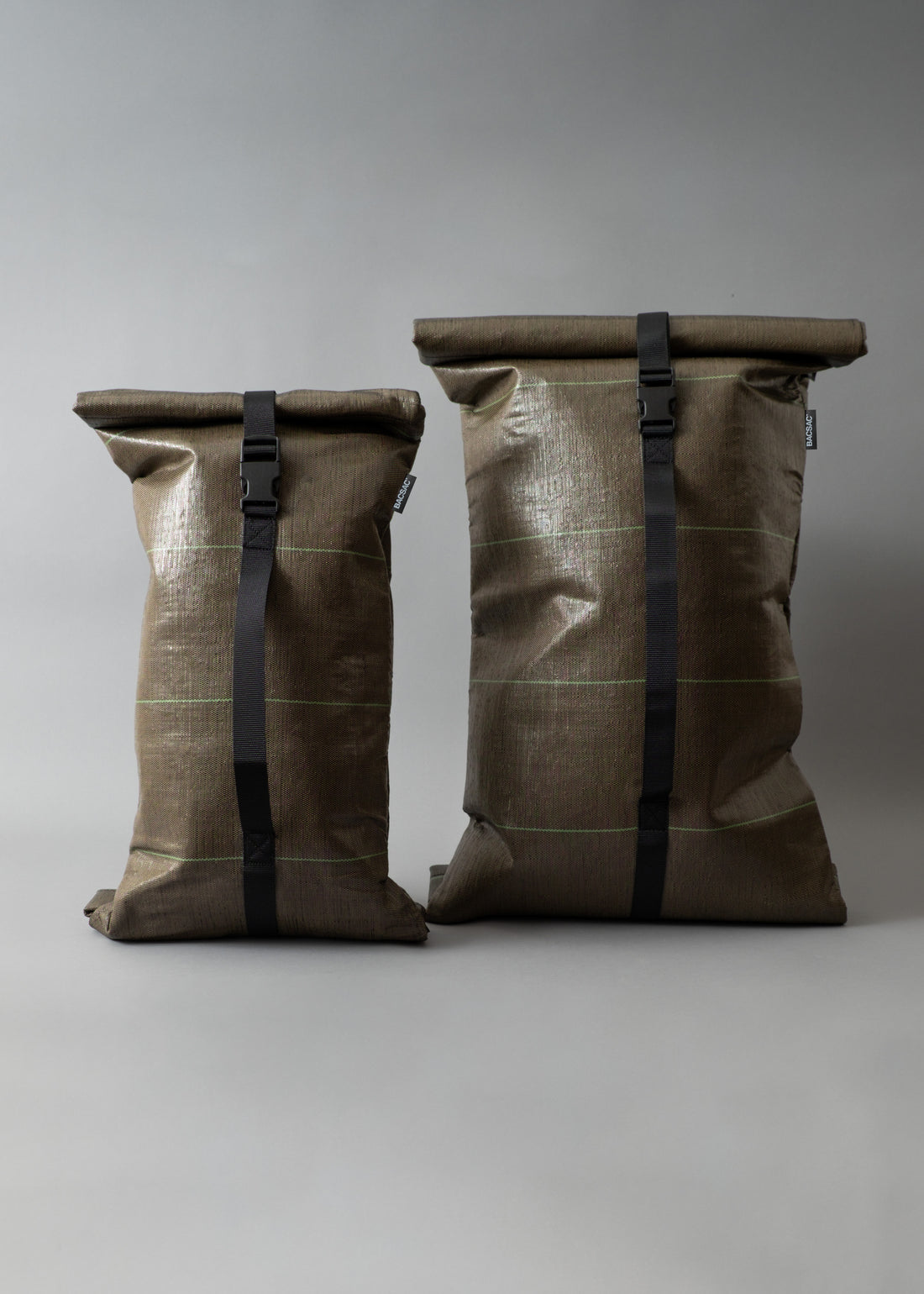
Ultra-practical, lightweight, portable, and durable: the BACSAC® compost bag is designed for composting in the city or the countryside, in your garden or on the smallest of balconies. A bag with two openings: one for adding your organic waste, the other for harvesting the compost once it has matured. (read the full guide after the description 🌱:)
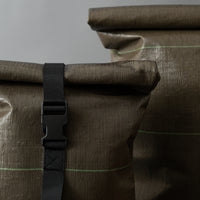
Made from breathable geotextile fabric, it allows for proper aeration of the material while retaining moisture—both essential elements for the life of microorganisms and their decomposition work.
| 20L BAG | height: 70 cm | width: 35 cm | weight: 570 g |
| 40L BAG | height: 90 cm |
width: 45 cm |
weight: 770 g |
BACSAC®, born in Paris in 2008, is a French company that creates flexible plant containers and gardening tools.
While nature is BACSAC®'s source of inspiration, the city is their preferred playground. Lack of access to open ground, contaminated soil, and weight and space constraints: a BACSAC® is a plot of land on the asphalt.
The ambition of BACSAC® is to offer a relevant, practical, and sustainable solution to the many challenges posed by reintroducing nature into the city and to address all types of spaces: from the smallest balconies to large landscaping projects.
- Place a first layer of soil to weigh down the bag and start the compost.
- Fill the bag in “lasagna” style, meaning by adding successive layers of moist nitrogen-rich matter and dry carbon-rich matter (see list below), preferably cut into pieces.
- Shake the bag to mix and aerate the organic matter. To make the mixture easier to homogenize, it is best to create thin layers of moist and carbon-rich materials.
- After each use, close the opening securely using the straps.
- The compost will form from the bottom. Turn the bag over to check its progress, stir it, and once mature, use the compost to amend the soil in your pots or your garden.
Where should I place my composting bag?
Designed for city living, our composting bag is for outdoor use: in your garden, on your terrace, or even on the smallest balcony. Choose a spot sheltered from drafts and sunlight, especially in summer, so that it retains its moisture and does not dry out. Compost will form from the bottom and release a precious fermentation liquid that you can collect by placing a saucer under the composting bag.
What are the golden rules of composting?
-
Respect the ratio of 2/3 moist matter rich in nitrogen and 1/3 dry matter rich in carbon.
– Moist matter: raw fruits and vegetables, tea leaves, coffee grounds, faded flowers, eggshells… To facilitate the process and limit unpleasant odors, we advise avoiding cooked food, meat, fish, or dairy products.
– Dry matter: dead leaves, bark, twigs, wood chips, egg cartons, cardboard, and plain paper bags. - Regularly mix and stir your compost to create a homogeneous and oxygen-rich environment. Without air, microorganisms cannot survive and other bacteria (known as anaerobic) take over: waste ferments and an unpleasant odor appears.
- Check the moisture. It is estimated that the right moisture level is around 50%. To the touch, the organic matter should be moist but not soaked, nor dry.
How do I collect and store my organic waste before putting it in the compost?
To limit trips between the kitchen and where you have placed your composting bag, choose a container with a lid to collect your moist waste. You can keep the container in the fridge while it fills up, to keep the material cool and prevent it from generating odors.
Is it normal to see fruit flies when I open the bag to add material?
Yes, it is perfectly normal because all the ingredients to attract these excellent decomposers are present: peels, sugar, and moisture! To limit their presence, always cover your moist additions with a layer of carbon-rich material before closing the bag. You can also temporarily limit your additions of sugary biowaste.
Should I moisten my compost?
In principle, if the 2/3 moist to 1/3 dry ratio is well respected, the moisture level should naturally be correct without adding water. However, if you notice that your compost lacks moisture, primarily reduce the addition of dry matter and/or place the composting bag sheltered from wind and sun. Generally, the presence of ants is a good indicator of a compost that is too dry. To add moisture to overly dry compost, slightly dampen your dry matter additions or pour a little water directly into the composting bag.
Can I add earthworms to the BACSAC® composting bag?
You can certainly add some earthworms to your composting bag. Their action will complement that of the microorganisms and help speed up the decomposition process, while aerating the compost. Warning: not all garden earthworms are suitable for vermicomposting. Only certain species—such as manure worms, tiger worms, or red wigglers—live on the surface and handle the decomposition of organic matter.
How long does it take for compost to start forming and how do I know if it is mature?
If all the conditions are met (respecting the dry/moist ratio, mixing organic additions to aerate and homogenize the material, good moisture level…), allow about 3 months for compost to start forming at the bottom of the bag. Its texture should be black, loose, and moist with a pleasant scent of the forest floor. We advise always leaving a thin layer of compost at the bottom of the bag to maintain the bacteriological activity.
How do I use my homemade compost?
Compost is an essential organic amendment for regenerating the structure and life of soils, whether in open ground or when growing in containers. It is distinct from soil or potting soil, which are growing media, or fertilizer, which directly stimulates plant growth.
- To nourish the soil in your pots, planters, and garden boxes: incorporate the compost by scratching or hoeing it into the top 5-10 centimeters of soil.
- For planting or repotting: do not plant your seedlings or plants directly in pure compost. Mix 1/3 compost with 2/3 soil before planting.
What are the best seasons to amend the soil with compost?
- In spring, during the plant's growth period.
- In autumn, as a mulch layer to nourish and protect your soils as winter approaches. The flowering is over, and all the plant's efforts will be focused on strengthening its root system.
I can't seem to get any compost!
Producing your own homemade compost is like any other garden experiment; you have to experiment, observe, work with the seasons, and sometimes fail! Be patient; with practice and observation, you will obtain that famous black gold.
"THE CITY IS A GARDEN, LET US CULTIVATE ITS EVERY CORNER."
BACSAC® was born in Paris in 2008 from an inspired meeting between a designer passionate about nature, Godefroy de Virieu, and two landscapers involved in the return of nature to the city, Virgile Desurmont and Louis de Fleurieu.
Together, they dreamt of a freer urban nature, unburdened by weight and space constraints, and set out to find an alternative to traditional pots that would address the challenges of creating a small patch of nature.
They invented a new type of geotextile container—flexible, lightweight, and nomadic. The idea of planting in bags stems from a desire to change habits, highlight what needs to be—the plants—and return to the simple principle of containing soil in order to cultivate it. A fabric to which they gave shapes and uses, allowing the city to be cultivated in its every corner. Aesthetic, intelligent, and easy-to-use objects, at the crossroads of design and landscape.
Since then, the roots of BACSAC® have branched out to sneak onto windowsills, balconies, terraces, and gardens in many cities around the world, facilitating access to the earth in response to the asphalt.
BACSAC® is a human-scale company guided by a family spirit that is open to the world.
All models are conceived in the BACSAC® Parisian studio, the fabrics come from French and Italian suppliers, and production is carried out by their long-standing partner in Romania.