
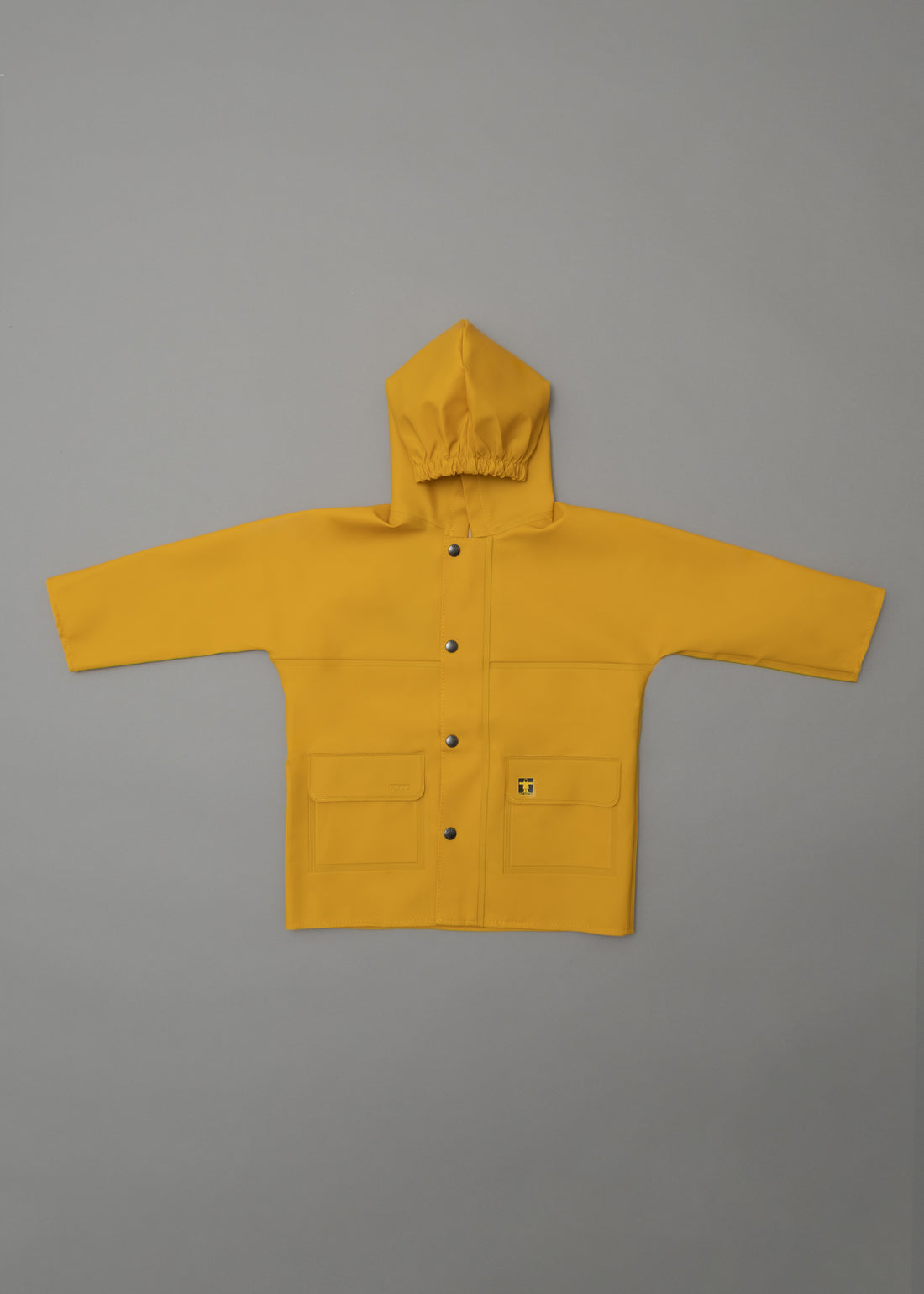
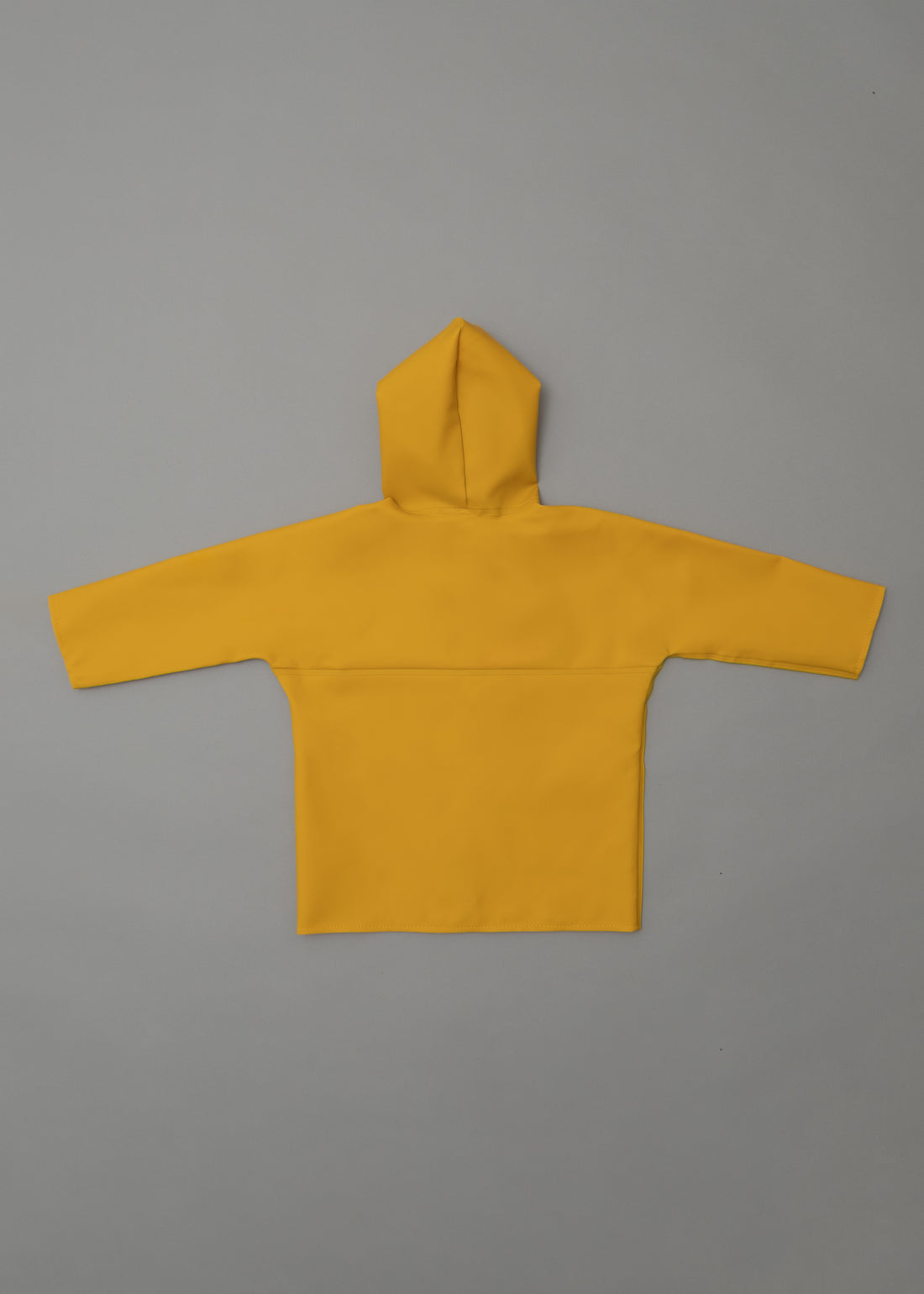


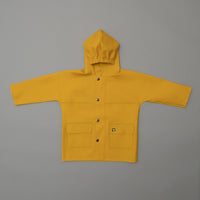
CHILD'S RAINCOAT - YELLOW - 320g/m² GLENTEX FABRIC - GUY COTTEN
The iconic oilskin: authentic, highly protective, and durable, to protect your little ones from rain and wind,
Ideal and essential for outdoor play and bike rides, wear it as a 100% waterproof total look with the Pouldo trousers!
Made of GLENTEX fabric, which is comfortable, supple, lightweight, and durable, it is the most popular of Guy Cotten's fabrics,
-
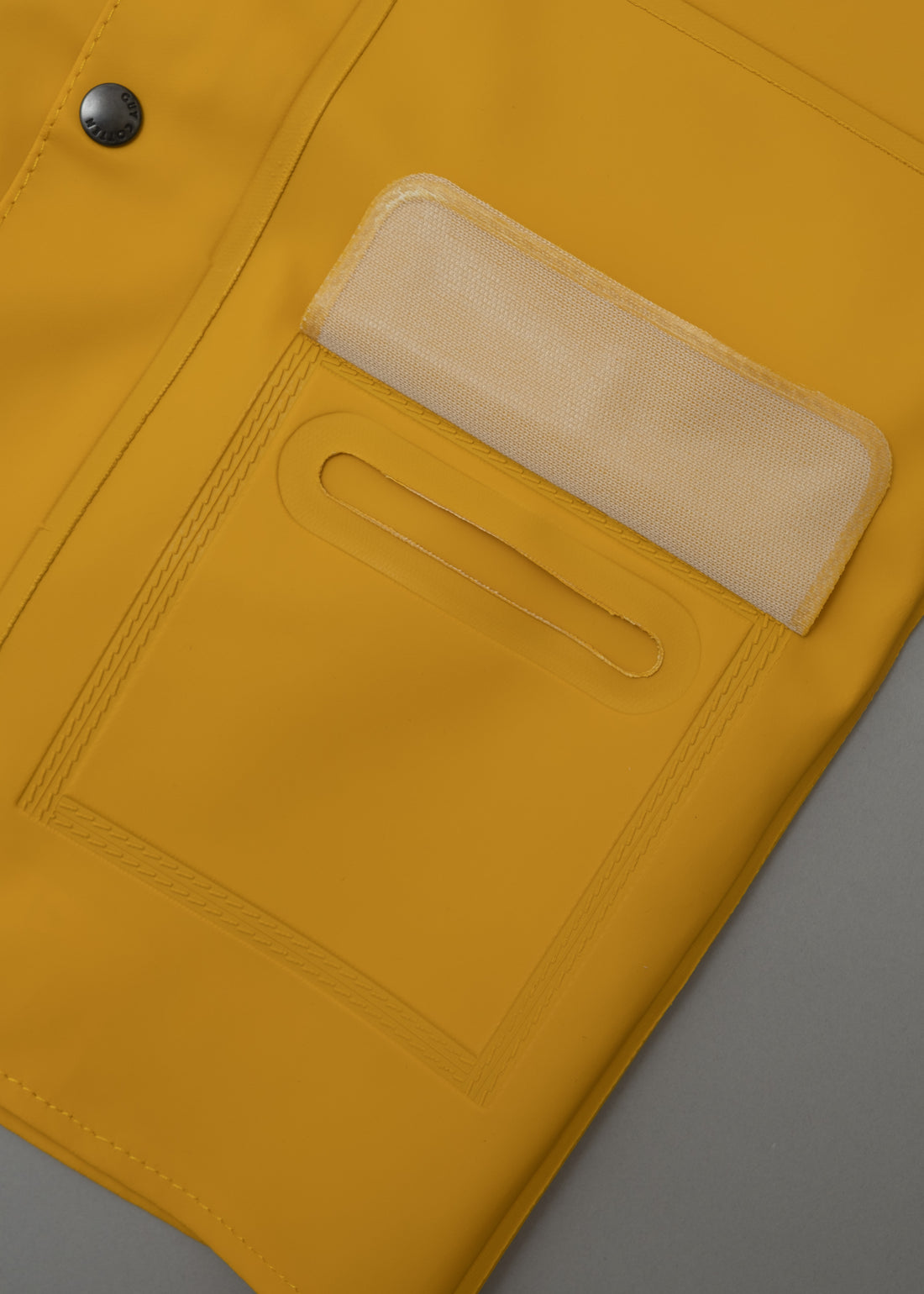
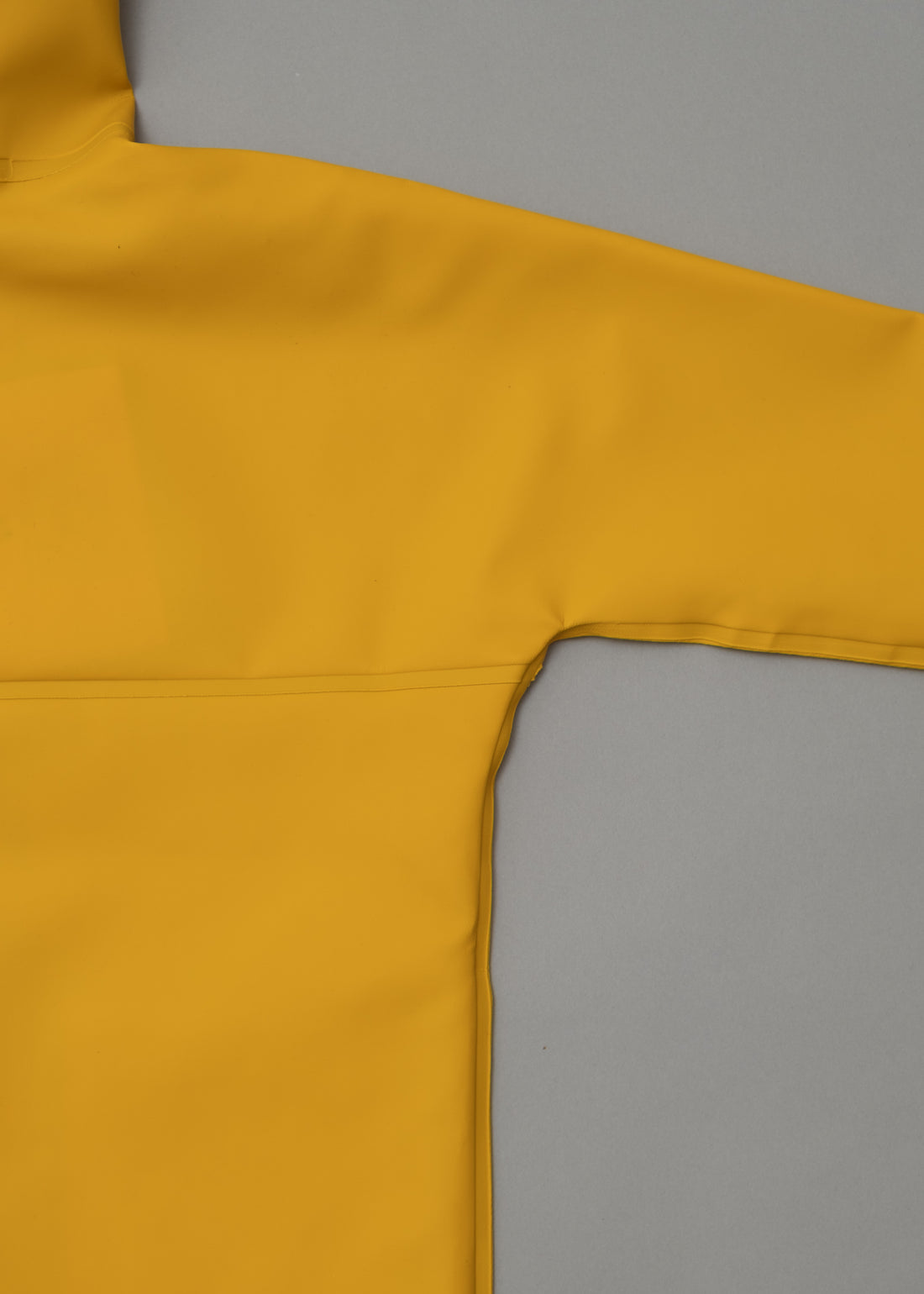
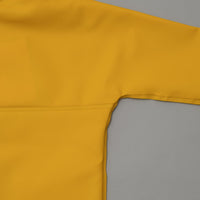
High-frequency welded seams for total waterproofing.
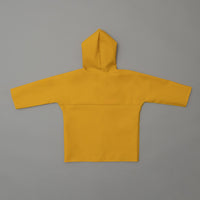
- Wraparound hood
- Zipper closure with waterproof snap-button flap
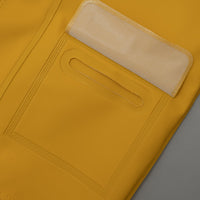
- Waterproof flap pockets
- Elasticated windproof cuffs.
- Kimono sleeves for an excellent fit.
- Repairable with our repair kit (sold separately)
Sturdiness, fit, durability, and timelessness remain the Brand's leitmotifs today.
Guy Cotten (1936-2013), born on the land, lived for the sea and its sailors. He spent incredible energy enabling them to protect themselves from the elements and designed waterproof, durable, and protective clothing to provide them with safety and comfort.
The company specializes in professional clothing for sailing and fishing, agriculture and industry, as well as leisure wear. Production remains mainly carried out in Brittany, across 3 production sites: 2 in Trégunc (29) and 1 in Landaul (56), while the workshop in Madagascar provides complementary support for items where "price impact" is unavoidable. GC prioritizes French or European materials, which represent the bulk of their manufacturing. All facilities strive for quality; GC does everything possible to maintain the brand's expertise in France. The flexibility and adaptability gained with the Madagascar workshop allow it not only to exist in France, but indeed to continue to develop and invest there.
Made in Madagascar like all Glentex fabric products.
CAP-COZ FABRIC (FRENCH MANUFACTURE): Professional use: FISHING/AGRICULTURE/INDUSTRY. Flexible and highly resistant. Single-sided coating. The generous outer coating provides robustness and absolute waterproofness, while maintaining excellent flexibility and very high resistance to temperature variations as well as fish oils and fats. The textile backing provides a pleasant feel, thermal insulation, and reduces condensation.
- Polyester backing: 110 g/m²
- PVC coating: 370 g/m²
- Total weight: 480 g/m².
GLENTEX FABRIC (MALAGASY MANUFACTURE): Professional use for agriculture and industry, as well as nautical & outdoor leisure activities. High flexibility and lightness. Single-sided coating. High-performance textile backing. Good resistance to fish oils and fats.
- Polyester backing: 65 g/m²
- PVC coating: 255 g/m²
- Total weight: 320 g/m².
The context: until the 1960s, sailors' clothing was made of coated cotton, mainly smocks or buttoned jackets—heavy, impractical garments that were not always very waterproof.
Since 1964, Guy Cotten has been selling fishing gear at the port of Concarneau. Yvon Hemery, a friend and head of the ROSBRAS sailing school, asked him to design a practical, lightweight, and durable garment for sailing.
In just a few days, Guy created a prototype made of polyester mesh with a PVC coating. This jacket featured a zipper and two protective flaps with Velcro, and the seams were reinforced with two high-frequency welds, eliminating any possibility of water infiltration.
The first oilskin was born! The ROSBRAS jacket.
In record time, the jacket became THE reference. Its windproof and waterproof system revolutionized the market. Today, there is not a single foul-weather jacket in the world that does not use the "Rosbras system."
Guy Cotten (1936-2013), born of the land, lived for the sea and its sailors. He spent incredible energy ensuring they could protect themselves from the elements and designed waterproof, durable, and protective clothing to provide them with safety and comfort.
In 1974, Alain le Quernec (who would become a committed graphic designer and renowned poster artist) was an instructor at the Rosbras sailing school, for which he had already created the logo.
Guy Cotten wanted to give his company a signature; already enjoying international renown, he asked Alain Le Quernec to work on a visual:
ALQ: I don’t have much experience, but a ferocious appetite for doing things. What would you especially like to bring out?
GC: People say my clothes are as practical as a jacket and as effective as a smock. So, I could see a little character hopping in the rain...
Very quickly, the idea of the "Little Yellow Man" emerged. In the form of sketches that were already quite well-developed, the project was proposed to Guy Cotten within the week.
GC: Isn't it a bit stiff?
ALQ: The strength of a logo is being able to see it from a distance. With yellow and black, I am sure we will meet the goal. You have to get used to it. If you wish, we can re-evaluate in two years, but I am not changing anything.
The young graphic designer's confidence unsettled Guy Cotten, who accepted the proposal. He did not suspect that he was giving his clothing an incredibly powerful image, a timeless image engraved in everyone’s mind today.