


JAPANESE RYOBA SAW - NIWAKI
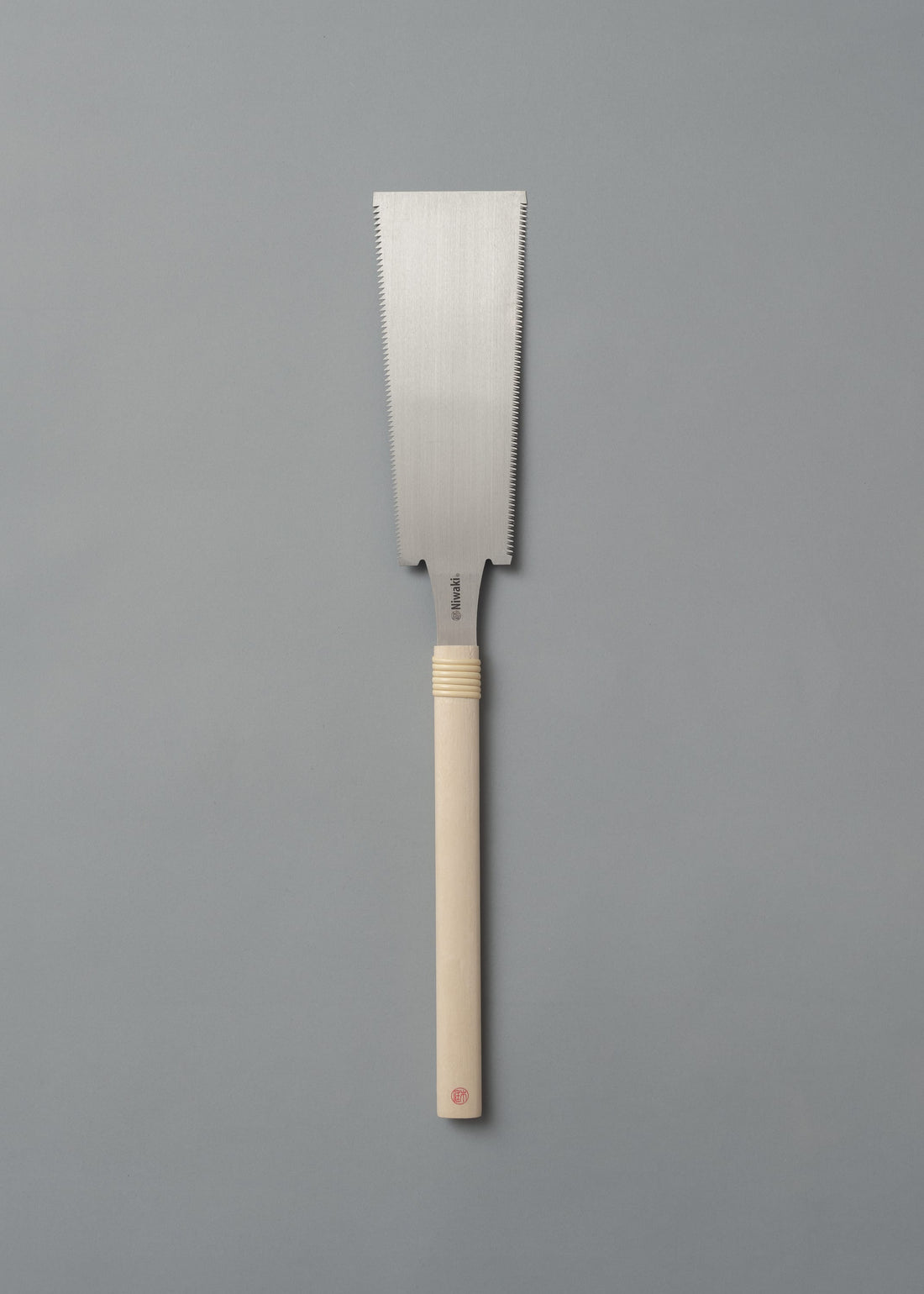
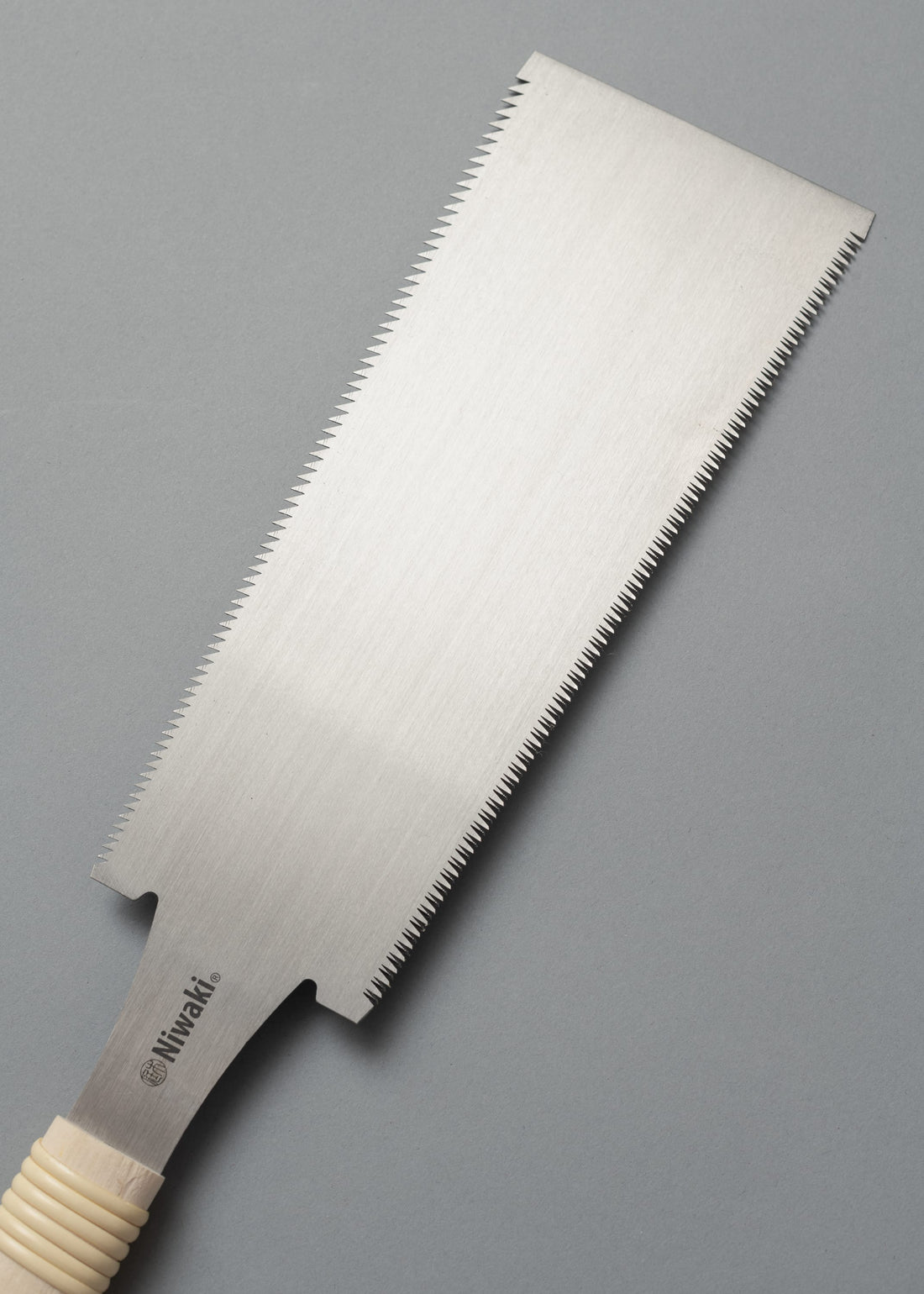
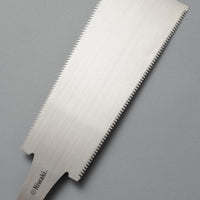
The Ryoba Japanese Saw is a very versatile double-sided saw. Fine teeth on one side for crosscuts (leveling) and larger teeth on the other for sawing along the grain of the wood.
Like all Japanese saws, cutting is done by pulling, sawing is effortless and gentle. The cutting line is finer, cleaner and more precise than that obtained with a traditional Western saw.
The closer the teeth are to the handle, the finer they are, to better start your cuts.
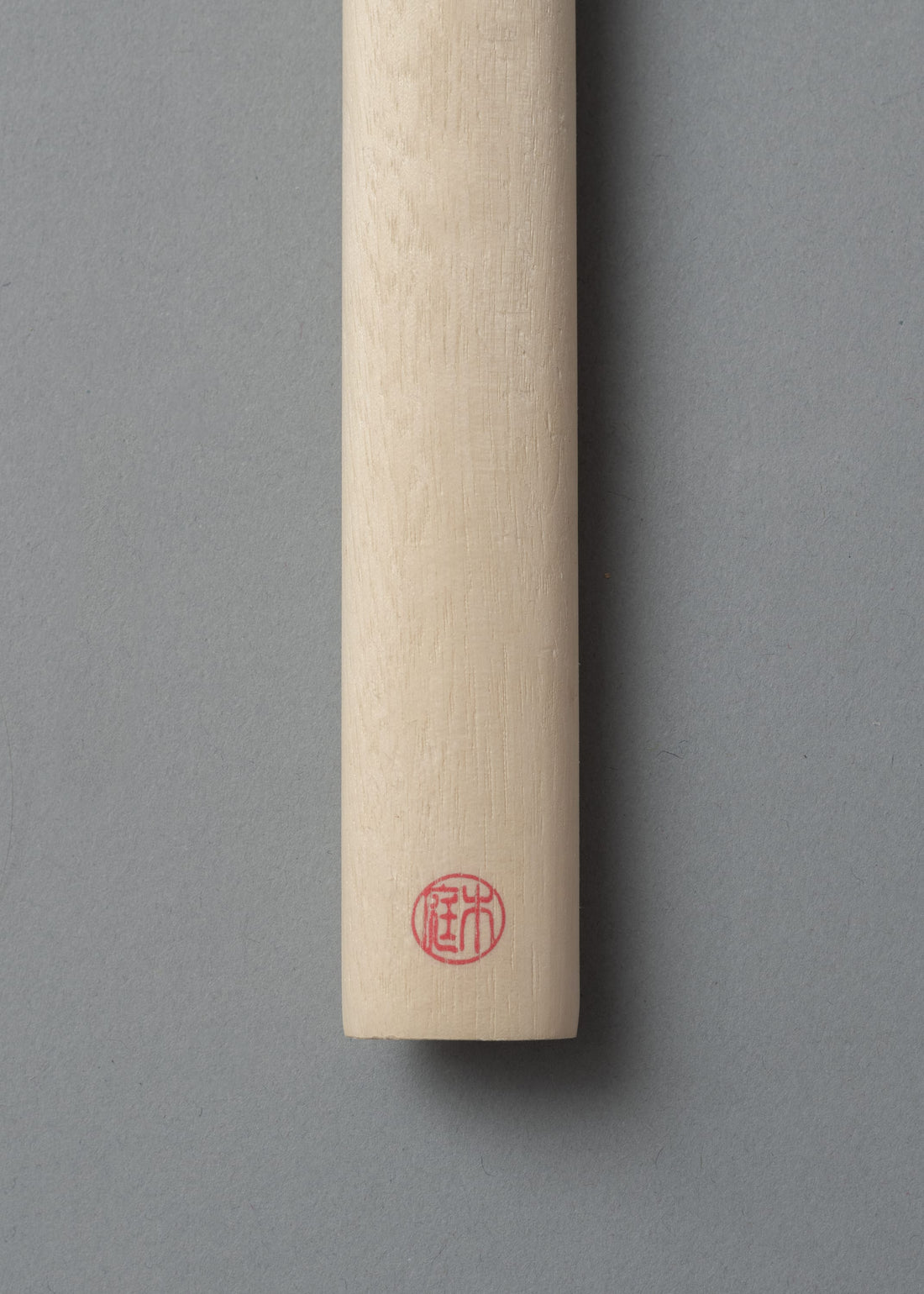
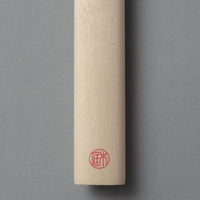
SK-5 steel blade and Magnolia handle
Our saws are manufactured by Shirai San, a 3rd generation saw manufacturer, for 45 years in Sanjo, Japan.
Niwaki brings the best of Japanese know-how, for gardeners, chefs, artisans. Tools with a simple and effective design, created to last, renowned for their exceptional quality.
- Weight: 148g
- Dimensions: 596 x 98 x 19 mm
- Blade: 244 mm
- SK5 steel
- Japanese Magnolia handle
- Made by Shirai-san, a 3rd generation saw maker with 45 years of experience in Sanjo, Japan
Our Japanese wood saws are excellent. Their design allows for thinner blades than traditional Western saws. They cut on the pull stroke, not the push stroke; the blade undergoes less pressure during cutting and uses less energy. Compared to a Western saw, the cut is much cleaner, more precise, and faster. However, the blades are more fragile, and improper use can damage them.
- Use a gentle sawing action, cutting on the pull and gliding on the push
- Do not let the weight of the branch pinch or catch the blade
- Do not twist the blade while sawing
- Do not use a small saw for a big job. Consider 1/3 of the blade length as the absolute maximum sensible cutting diameter.
After studying sculpture in London, Jake Hobson went to Japan to investigate the Japanese relationship with nature and the environment around them.
Jake discovered that Japanese gardens were not just like gardens. They were mountains, rivers, rocks, trees, and waterfalls. It was everything he loved; these gardens told stories and referred to real landscapes in Japan.
Niwaki literally means "garden tree," it is the art of tree pruning, quite different from that of Bonsai, as the roots are not pruned. But Niwaki is much more than that. It implies a philosophy, that of the landscape, of the re-creation of unique microcosms, the vision of a man and his bond, his understanding, his learning from nature.
But all this was possible through the use of tools sharing the same philosophy, created slowly, simply, by hand, by local master blacksmiths with exceptional expertise.
For Jake Hobson, every tool comprises three crucial elements:
- a good material, mainly high-quality carbon steel
- a good design, generally as simple as possible
- good craftsmanship, passed down from generation to generation.
Japanese tools do not skimp on any of these elements: you feel the quality of the artisanal work as soon as you hold them in your hand; they simply and perfectly do the job for which they are designed, and they last, holding their edge for a long time, rewarding the user with years, decades, and even lifetimes of pleasure.