


FOLDING KNIFE - OYSTERS & SHELLFISH - N°9 - OPINEL
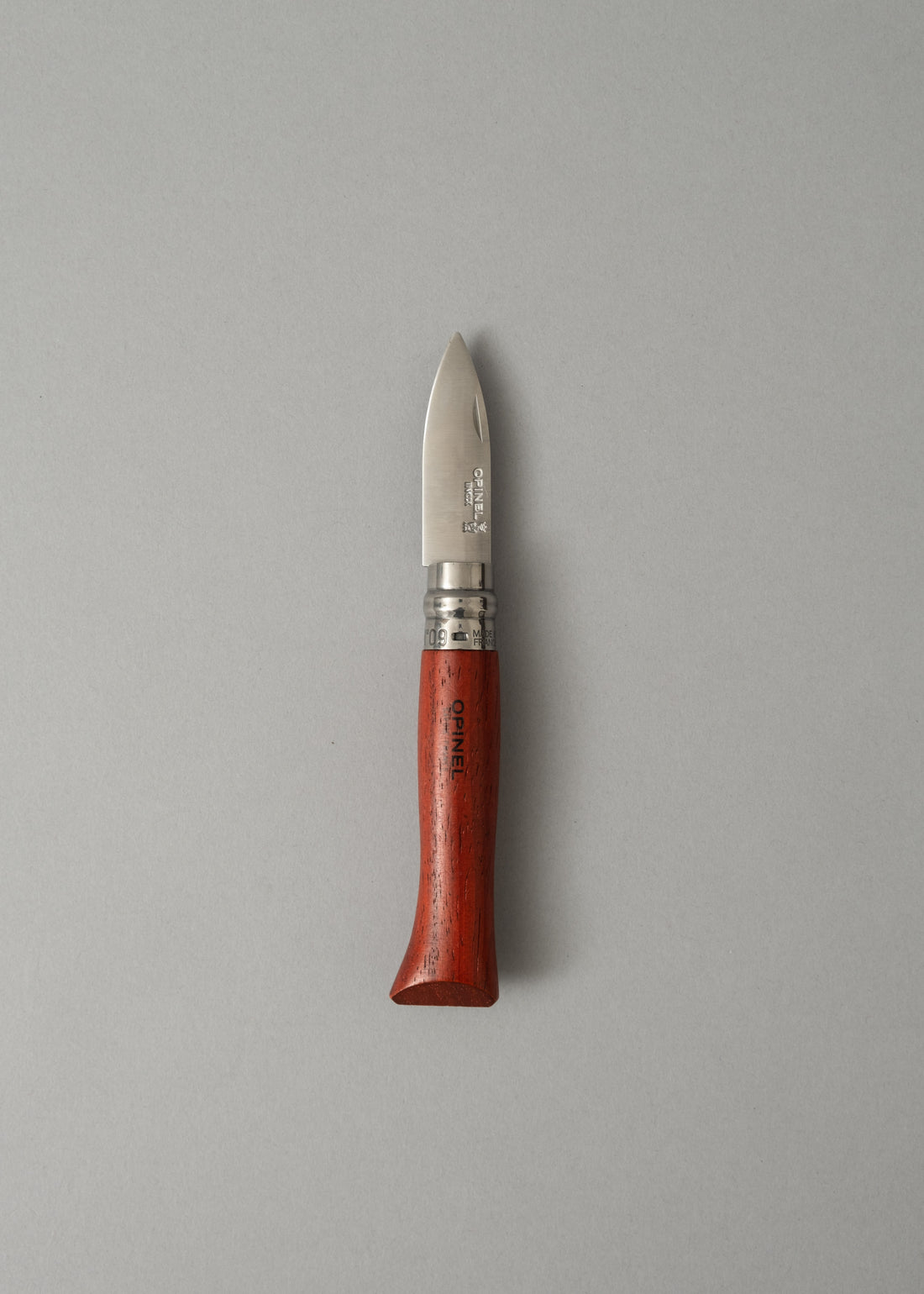
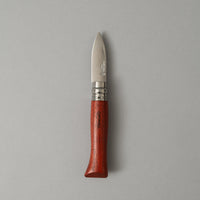
Folding Opinel for opening oysters and shellfish anywhere, on a picnic, on the beach, at home... (with a good white keel)
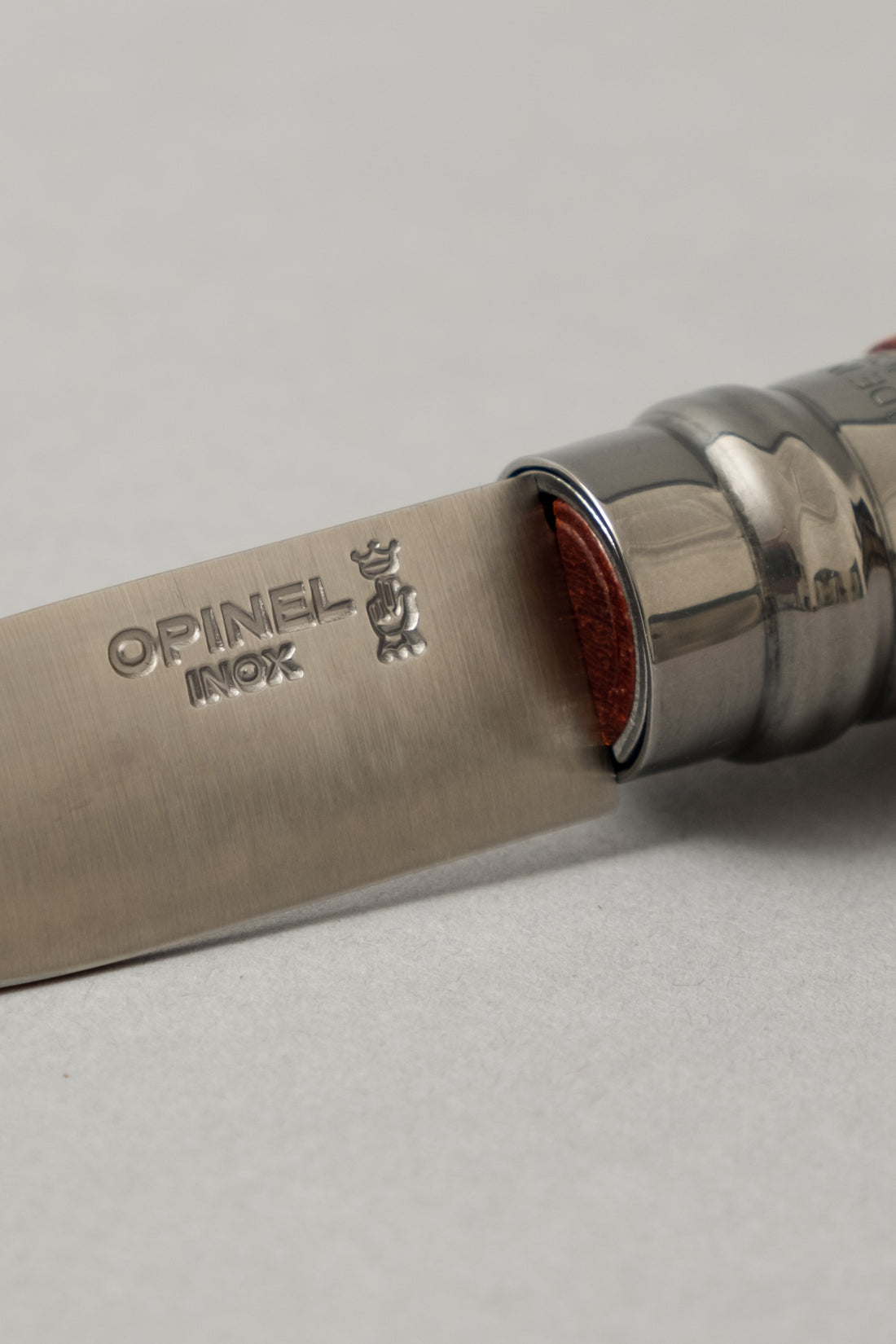
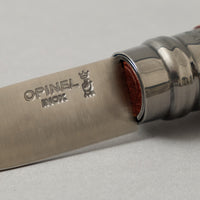
Short 6.5 cm stainless steel blade, robust and sharp, cutting only at the tip.
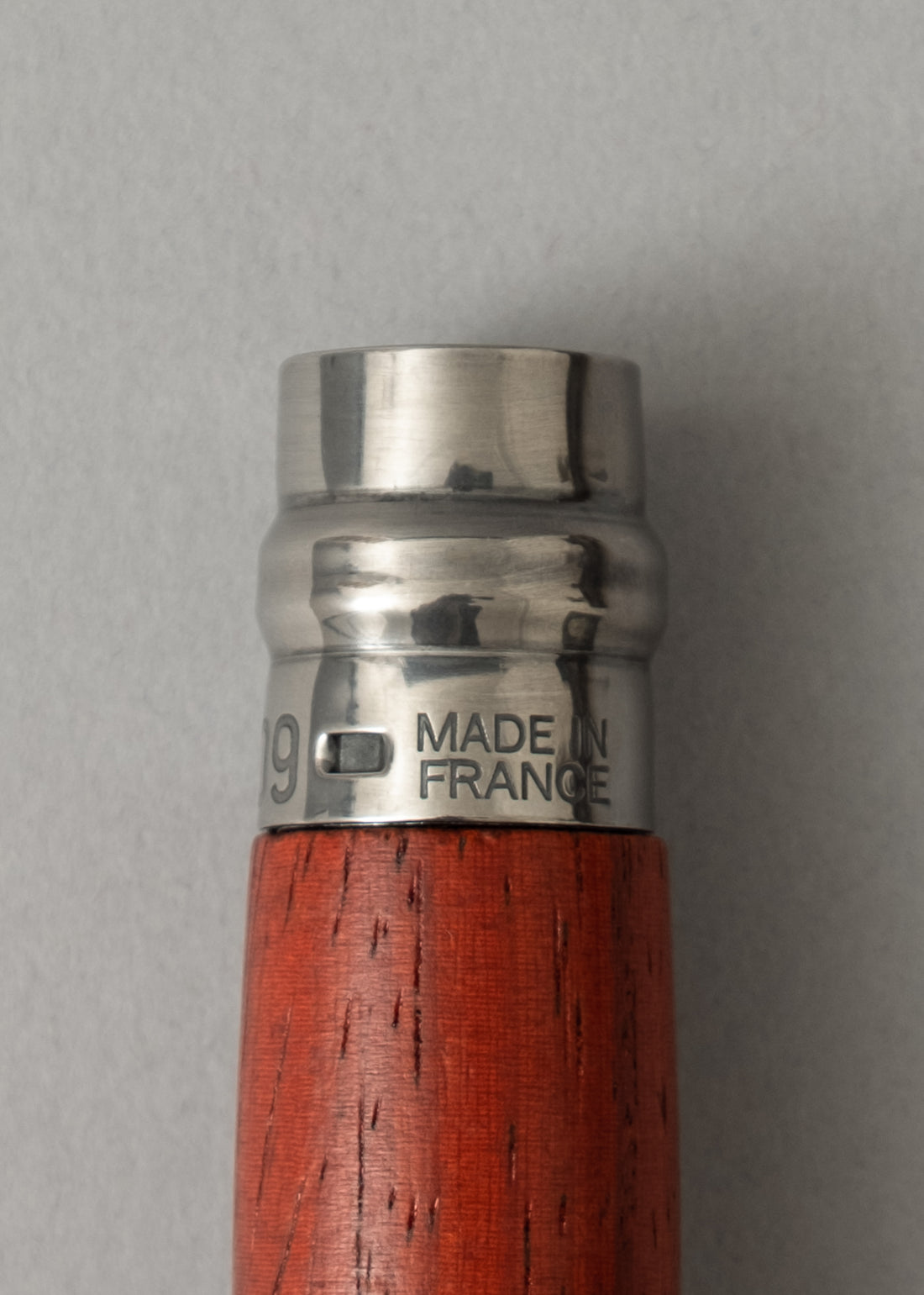
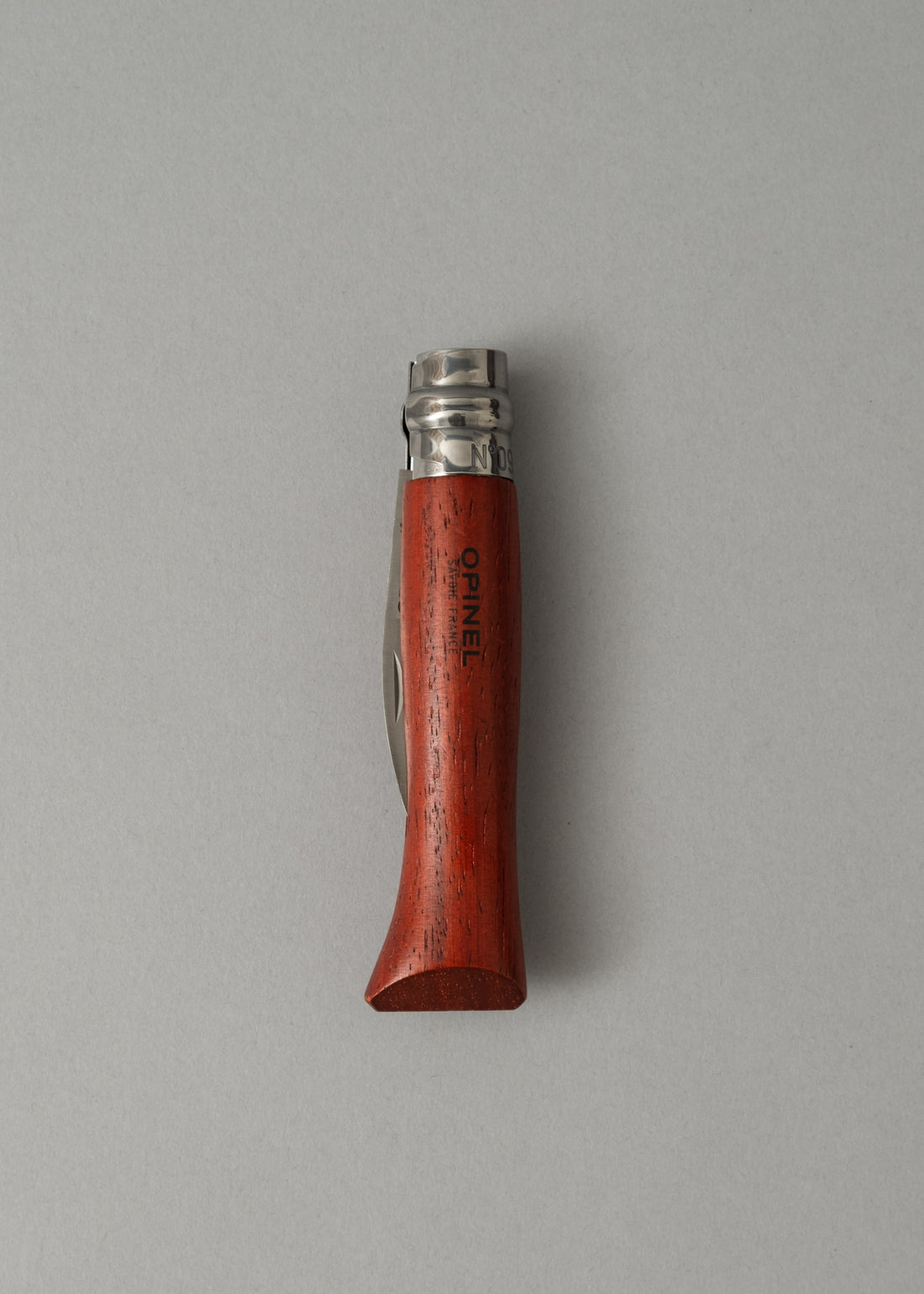
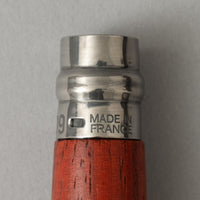
Patented “Virobloc” locking ferrule, to use and transport your knife in complete safety.
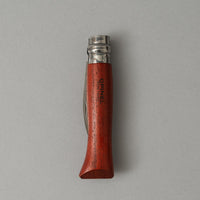
Moisture-resistant Padauk handle.
The knife comes with a “Tips and Tricks” booklet to learn everything about oysters.
All Opinel knives & tools are made in France in the Chambéry factory in Savoie.
“Come hang out in the alley, I’ll show you my Opinel, I’ll swipe your jacket…” Laisse Béton - Renaud
The Opinel knife was invented by Joseph Opinel (1872-1960) in 1890, when he was 18 years old, in Gevoudaz, a hamlet in Albiez-le-Vieux in the Savoie department. Originally a toolmaker by trade, the young man also made pocket knives for his friends. After one of his models became very popular, he began industrial production of the knives, and his invention soon spread beyond his immediate circle.
In 1909, he registered “the Crowned Hand” of the Duchy of Savoy, which appears on all blades. The Opinel brand was registered by its creator in 1909 and became an immediate success. The famous safety ring (virobloc) only dates back to 1955.
In 1989, Opinel opened its own museum by converting the workshop of Jacques Opinel's grandfather. In 2013, the museum was renovated and expanded.
The company is still owned and managed by the Opinel family.
GOOD TO KNOW ;)
It is one of the 999 “design classics” listed in the Phaidon Design Classics, it has been exhibited at the Museum of Modern Art (MoMA) in New York, and in 1985, the Victoria and Albert Museum in London selected it for an exhibition dedicated to the “100 most beautiful objects in the world,” alongside the Porsche 911 and the Rolex watch.
Pablo Picasso used it for sculpting, Alain Colas escaped death by cutting a line that was pinning his leg, and Éric Tabarly swore by his Opinel. Serial killers Francis Heaulme and Guy Georges also used them. The latter was even convicted for murders committed with a No. 12 Opinel. Nice.
MANUFACTURING A CLASSIC FOLDING OPINEL:
All pocket knives, table knives, kitchen knives, and garden tools are manufactured in France at the Chambéry factory in Savoie.
The site employs 147 people, 93 of whom are directly involved in production.
Beneath its simple and robust appearance, the Opinel hides many manufacturing secrets. The Yatagan-shaped blade, inspired by a Turkish saber, is manufactured in four stages. It is cut by a 120-ton press, then undergoes heat treatment, which differs depending on whether it is a carbon or stainless steel blade. It is then ground, then polished. The quality of the water, absolute adherence to heat treatment cycles, and blade sharpening are three of the intrinsic parameters that forge the character of the Opinel.
The wooden handle, made mostly from beechwood squares from the Jura, but also from cherry, pear, and ash, is shaped automatically. It is then coated with a polyurethane varnish to resist moisture, and then engraved. Fitted to the shape of the handle, the safety ring is necessary to securely link the blade to the handle.